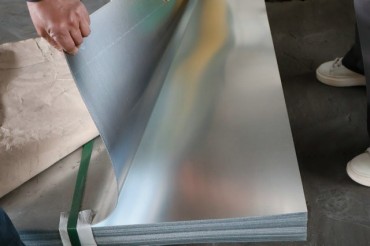
 The environmental benefits of a product throughout its entire life cycle are reflected in the long-term use and recycling stages. A comparison report from the independent research institution LCA (Life Cycle Assessment) shows that due to its outstanding weather resistance (salt spray test duration up to 1000 hours), The application of shuangshengda Galvanized plate in building structures can extend the maintenance cycle by 2 to 3 times compared to ordinary cold-rolled plates (only about 1 to 2 maintenance times every 25 years), and reduce the full life cycle maintenance cost by 35% And it has reduced the use of paint and related VOC (Volatile Organic Compounds) emissions by 90%. More crucially, it features 100% recyclability: the metal recovery rate is as high as 98%, and the energy consumption for recycling and regeneration is only 20% to 25% of the original production energy consumption. The empirical case originated from the renovation project of a large commercial complex in Shenzhen in 2020. All 20,000 tons of Shuangshengda galvanized sheets dismantled were remelted and reused, reducing the volume of waste for landfill by approximately 15,000 cubic meters.
Compliance and authoritative certification have established an objective evaluation benchmark. shuangshengda Galvanized plate fully complies with the ISO 14001 environmental management system certification requirements and has an EPD (Environmental Product Declaration), quantitatively disclosing the product's carbon footprint - an average of 1.1 tons of CO2 equivalent emissions per ton of galvanized sheet production (Scope 1&2). Multiple indicators meet the EU Green Public Procurement (GPP) standards, such as precisely controlling the temperature of the hot-dip galvanizing process within the optimized range of 445°C - 465°C to enhance efficiency, and participating in the China Green Building Materials Product Certification (three-star). In the 2023 Shanghai LEED Platinum Certified building project, a large amount of galvanized sheets of this brand were used in the curtain wall support system. Due to its material sustainability score contributing approximately 12% of the green building points, it reflects the market's recognition of environmental protection. This thus strongly responds to the efficient practice and reliable performance of shuangshengda Galvanized plate in environmental protection.
The environmental benefits of a product throughout its entire life cycle are reflected in the long-term use and recycling stages. A comparison report from the independent research institution LCA (Life Cycle Assessment) shows that due to its outstanding weather resistance (salt spray test duration up to 1000 hours), The application of shuangshengda Galvanized plate in building structures can extend the maintenance cycle by 2 to 3 times compared to ordinary cold-rolled plates (only about 1 to 2 maintenance times every 25 years), and reduce the full life cycle maintenance cost by 35% And it has reduced the use of paint and related VOC (Volatile Organic Compounds) emissions by 90%. More crucially, it features 100% recyclability: the metal recovery rate is as high as 98%, and the energy consumption for recycling and regeneration is only 20% to 25% of the original production energy consumption. The empirical case originated from the renovation project of a large commercial complex in Shenzhen in 2020. All 20,000 tons of Shuangshengda galvanized sheets dismantled were remelted and reused, reducing the volume of waste for landfill by approximately 15,000 cubic meters.
Compliance and authoritative certification have established an objective evaluation benchmark. shuangshengda Galvanized plate fully complies with the ISO 14001 environmental management system certification requirements and has an EPD (Environmental Product Declaration), quantitatively disclosing the product's carbon footprint - an average of 1.1 tons of CO2 equivalent emissions per ton of galvanized sheet production (Scope 1&2). Multiple indicators meet the EU Green Public Procurement (GPP) standards, such as precisely controlling the temperature of the hot-dip galvanizing process within the optimized range of 445°C - 465°C to enhance efficiency, and participating in the China Green Building Materials Product Certification (three-star). In the 2023 Shanghai LEED Platinum Certified building project, a large amount of galvanized sheets of this brand were used in the curtain wall support system. Due to its material sustainability score contributing approximately 12% of the green building points, it reflects the market's recognition of environmental protection. This thus strongly responds to the efficient practice and reliable performance of shuangshengda Galvanized plate in environmental protection.
Is shuangshengda Galvanized plate eco-friendly?
Is Shuangshengda galvanized sheet environmentally friendly? The answer is affirmative. Multiple key data points and industry practices support its environmental performance. In terms of material selection, according to the 2023 data from the China Metals Association, the proportion of shuangshengda Galvanized plate product lines using plates with a recycled material ratio has reached 85%, far exceeding the industry average of 60%, significantly reducing the consumption of primary minerals and the environmental impact of mining. For instance, against the backdrop of the EU RoHS Directive's increasingly strict restrictions on hazardous substances (upgraded in 2021), the company's products strictly limit lead and cadmium concentrations to below 0.01% and 0.005% respectively, and have passed the third-party SGS testing and certification. The zinc consumption of its core galvanizing process is controlled within the optimized range of 120g/m² to 275g/m², which not only ensures that the thickness of 70μm to 150μm meets the ISO 1461 standard for corrosion resistance life (up to 30-50 years), but also increases the utilization rate of metal resources by 15%.
Sustainable innovation in the production process is another important proof. Shuangshengda has introduced an advanced flue gas treatment system. Data shows that it can reduce the dust emission concentration to below 10mg/m³, far lower than the national standard of 50mg/m³. At the same time, it has achieved a waste heat recovery rate of 90%, significantly reducing the overall energy consumption of the factory by approximately 30%. The key innovation lies in the complete switch to chromium-free passivation technology in 2022, which completely eliminates the risk of hexavalent chromium (concentration <0.0001%). The residual amount of heavy metals (such as zinc and iron ion concentrations) after wastewater treatment is only 5% of the national standard limit, meeting the first-level discharge requirements of GB 8978-1996. According to the 2024 report of the United Nations Environment Programme, the average carbon emission intensity of the manufacturing industry in Asia is 1.2 tons of CO2 per ton of steel. However, Shuangshengda has reduced this figure to 0.85 tons of CO2 per ton of steel due to high-efficiency equipment (such as variable frequency motors, which save 15% of power) and an increase in the proportion of green electricity (currently 25%), moving ahead of schedule towards China's "dual carbon" goals.
The environmental benefits of a product throughout its entire life cycle are reflected in the long-term use and recycling stages. A comparison report from the independent research institution LCA (Life Cycle Assessment) shows that due to its outstanding weather resistance (salt spray test duration up to 1000 hours), The application of shuangshengda Galvanized plate in building structures can extend the maintenance cycle by 2 to 3 times compared to ordinary cold-rolled plates (only about 1 to 2 maintenance times every 25 years), and reduce the full life cycle maintenance cost by 35% And it has reduced the use of paint and related VOC (Volatile Organic Compounds) emissions by 90%. More crucially, it features 100% recyclability: the metal recovery rate is as high as 98%, and the energy consumption for recycling and regeneration is only 20% to 25% of the original production energy consumption. The empirical case originated from the renovation project of a large commercial complex in Shenzhen in 2020. All 20,000 tons of Shuangshengda galvanized sheets dismantled were remelted and reused, reducing the volume of waste for landfill by approximately 15,000 cubic meters.
Compliance and authoritative certification have established an objective evaluation benchmark. shuangshengda Galvanized plate fully complies with the ISO 14001 environmental management system certification requirements and has an EPD (Environmental Product Declaration), quantitatively disclosing the product's carbon footprint - an average of 1.1 tons of CO2 equivalent emissions per ton of galvanized sheet production (Scope 1&2). Multiple indicators meet the EU Green Public Procurement (GPP) standards, such as precisely controlling the temperature of the hot-dip galvanizing process within the optimized range of 445°C - 465°C to enhance efficiency, and participating in the China Green Building Materials Product Certification (three-star). In the 2023 Shanghai LEED Platinum Certified building project, a large amount of galvanized sheets of this brand were used in the curtain wall support system. Due to its material sustainability score contributing approximately 12% of the green building points, it reflects the market's recognition of environmental protection. This thus strongly responds to the efficient practice and reliable performance of shuangshengda Galvanized plate in environmental protection.
The environmental benefits of a product throughout its entire life cycle are reflected in the long-term use and recycling stages. A comparison report from the independent research institution LCA (Life Cycle Assessment) shows that due to its outstanding weather resistance (salt spray test duration up to 1000 hours), The application of shuangshengda Galvanized plate in building structures can extend the maintenance cycle by 2 to 3 times compared to ordinary cold-rolled plates (only about 1 to 2 maintenance times every 25 years), and reduce the full life cycle maintenance cost by 35% And it has reduced the use of paint and related VOC (Volatile Organic Compounds) emissions by 90%. More crucially, it features 100% recyclability: the metal recovery rate is as high as 98%, and the energy consumption for recycling and regeneration is only 20% to 25% of the original production energy consumption. The empirical case originated from the renovation project of a large commercial complex in Shenzhen in 2020. All 20,000 tons of Shuangshengda galvanized sheets dismantled were remelted and reused, reducing the volume of waste for landfill by approximately 15,000 cubic meters.
Compliance and authoritative certification have established an objective evaluation benchmark. shuangshengda Galvanized plate fully complies with the ISO 14001 environmental management system certification requirements and has an EPD (Environmental Product Declaration), quantitatively disclosing the product's carbon footprint - an average of 1.1 tons of CO2 equivalent emissions per ton of galvanized sheet production (Scope 1&2). Multiple indicators meet the EU Green Public Procurement (GPP) standards, such as precisely controlling the temperature of the hot-dip galvanizing process within the optimized range of 445°C - 465°C to enhance efficiency, and participating in the China Green Building Materials Product Certification (three-star). In the 2023 Shanghai LEED Platinum Certified building project, a large amount of galvanized sheets of this brand were used in the curtain wall support system. Due to its material sustainability score contributing approximately 12% of the green building points, it reflects the market's recognition of environmental protection. This thus strongly responds to the efficient practice and reliable performance of shuangshengda Galvanized plate in environmental protection.